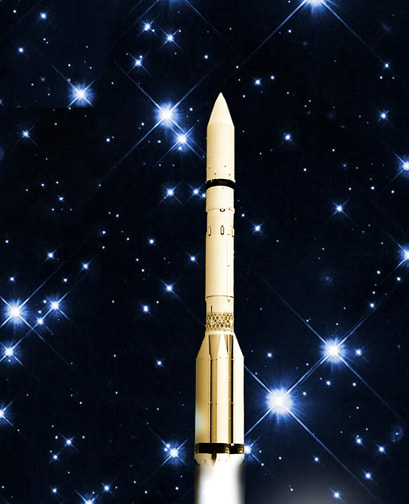
“Three...two...one...fire!” Hissss. Pop. “Uh, oh!” said the technician as the meters all swung to zero and red lights lit up down the length of the long control panel. My signals also had disappeared. “What’s up?” I asked. “We just blew up the test stand.” “That little pop?” “Yeah, that little pop.” I moved toward the door to see what had happened. I visualized some minor damage. The little pop made it seem like the technician must be exaggerating. “Hold on, don’t go out,” he said. “Safety requires an hour wait.” He was right. Hydrogen and Fluorine were the propellants for our rocket engine — nasty stuff those, and they had to be fully dissipated before we could pay a visit outside. The test stand consisted — I should say had consisted, before our recent, most rapid remodeling — of a concrete blockhouse, a neat tangle of piping and tanks above a concrete pad, and the rocket mounting fixtures. These fixtures projected the blast from the engine horizontally over the lip of a steep canyon near the fabled California town of San Juan Capistrano. The blockhouse was long and narrow — perhaps twice the size of a large living room. It was situated about thirty yards from the canyon’s edge and oriented parallel to the edge. The control panel stretched along the entire length of the blockhouse wall facing the canyon. Doors at each end of the blockhouse opened onto narrow, concrete walled, and labyrinth shielded, walkways which led to the canyon lip. Between the blockhouse and the canyon was the tangle of silvery pipes and tanks — all of which were suspended over our heads by massive steel girders. These girders also supported the cradle which mounted the rocket engine. With nothing to do, time passed slowly until the all clear was given. Eagerly, I walked out the door and passed the labyrinth shield to find that the entire far end of the test stand had simply . . . vanished. Ten yards from the edge of the canyon the piping and girders, the rocket engine and its cradle, all had been sheared off, as neatly as if with a surgeon’s scalpel, and vaporized. Only the concrete pad remained, just slightly scorched. “We won’t be doing any more testing soon,” said the technician. “I’ve seen this before. It’ll be a year before we get this place up and running again.” All I had, after nearly a year’s hard work, was about a second’s worth of now priceless data. I realized we would have to proceed to the flight tests without the confidence building experiments that we had intended. That’s often the way it is with National Priority programs. What we were doing was, after all, of the greatest national significance... Excerpt from "Rocket Science," in From The Potato to Star Trek and Beyond: Memoirs of a Rocket Scientist. Copyright @ 2022 Chester L. Richards. All rights reserved. Photo Minuteman III Rocket launch from Vandenberg Air Force Base. Camera Operator: F. Franz. Released to public. New! See me talking about Flying Rockets in Space, crystals and bedrooms on new YouTubeVideo!
0 Comments
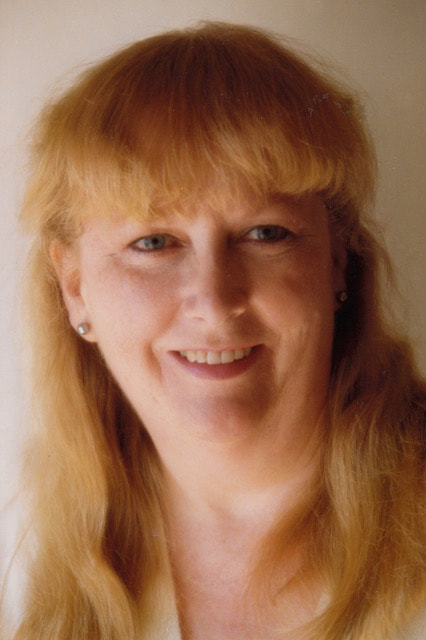
It had been a good day at work, a day of considerable achievement. I was looking forward to telling Sarah. The last few weeks had been hard on her. She was recovering from a fractured pelvis, and the pain had visibly weakened my Sarah. The news, I hoped, would give her some pleasure.
After the long drive from work, I finally arrived home. Odd. No cheerful greeting. Something was wrong. I found Sarah sitting in her wheelchair at the entrance to the bathroom. She had been there a long time, she said, waiting for me to arrive. She got up, took a few steps, collapsed and lay still. No doubt it was only a few minutes before the paramedics arrived, but it seemed an eternity. I knew Sarah’s heart had stopped and time was now against her. The paramedics did get her heart going again, but as one of them turned to look at me, his expression, and a slight shake of his head, filled me with dread. At the hospital I waited in the Chapel while the staff worked to stabilize Sarah. Time passed. The head physician came to get me. His pessimism was apparent. For a long while I stood beside my beautiful wife’s silent form, talking to her, telling how much I loved her. She seemed to respond to my voice, but it could have been an illusion. Soon the staff told me to go home and get some rest. I turned on every light in the house. It didn't give me much comfort, but it was better than the dark. Later in the evening the hospital called. Sarah's heart had stopped, but they’d managed, once more, to get it going. They asked for instructions. I told them if it stopped again they were to let her go. But her heart continued strong and steady. Much earlier I’d called Paul, her son by a previous marriage. He’d immediately started south from San Francisco. I expected he would arrive sometime around midnight, or shortly thereafter, so I stayed up waiting for him. In the morning I awoke from a short sleep on the sofa. Paul had still not arrived. Another worry. Mid-morning Sarah’s son showed up. He had been so tired on the drive south he pulled off the road and slept through the night. Good. Better late than worse. We talked. He had not realized how serious the situation was. At the hospital I left Paul alone with Sarah. He had many things to say to her. A couple of hours later he found me, and we stayed with her together. Shortly before the end a priest arrived to give last rites. Sarah’s blood pressure slowly began to fade. The attending nurse had briefed us, so we knew this was the end. The inevitable continued until only the oxygen machine was still pumping her lungs — simulating a life that was no longer there. I turned it off. Paul could not bear to stay. This place was now a nightmare. He headed north to be with his family. Alone in agony, I wailed, and wept long into the night. There was much to do the next day. Work had to be notified and business put on hold. A funeral had to be arranged. A gathering planned. A grave and gravestone had to be purchased. Friends had to be notified. The day passed quickly. Exhausted, I slept, but not well, that night. The next morning it really hit me. The house was empty. It would always be empty. Half of me was gone. I had been sliced in two, from the top of my head on down. I was deep in shock. There are no words to describe the experience. No language is capable. If you have suffered the like no words are needed. You know. If you have not, you simply cannot comprehend. One thing was clear, I could not stay here. I fled. My colleagues at work were shocked to see me. I couldn't explain. I needed to be someplace different but familiar. Most of all, I needed the human companionship of my collegial friends. I felt a certain relief being in my office, and tried to work on my project. The nature of my work as an engineering physicist often requires intense focus. This concentration was now out of the question. I couldn’t do a thing. At least, though, I was in a place of comfort. Sarah was universally loved. At the upcoming funeral our friends would want some reminders of her life. That was my task. I sat for a while, remembering the stories she had told me about the years before we met. I remembered the many things we had shared. Yes, there was much I could report to our friends. Much, but not all. Many things were just between the two of us. I sat in my office and began to write. I wrote A Great Lady. I told about Sarah’s early life and gave some hint of the troubles she had experienced. I wrote of her talents and triumphs. I wrote about things we had done together. I told of the great privilege I had had spending so many years with this wonderful woman. I wrote my love. And as I wrote, my mood lightened. The days passed. Friends from all over came to the funeral. It was good to see everyone again. We talked, we told stories, we laughed, we cried. We said farewell to the one we all loved. All gave me comfort. All gave me their love. After this brief bright moment I sank back into darkness. This depression, I knew, would be fatal. And I knew I must find some way back up towards the light. While I brooded over the question of how to move forward, the warmth I had felt when I wrote my eulogy flooded through me. I knew what to do. Sarah liked my stories. She liked to hear of my travels to exotic places, of my challenging and rewarding experiences as an aerospace engineer. Most of all she liked to hear about the people I’d met along the way. Many times Sarah said I should write these tales. I never did. I never wanted to, but now I needed salvation. If writing would put me on the upward path, I would write. I would write stories drawn from my experiences. I would write in memory of Sarah. Writing worked. I began to heal. Each story is a letter of love to my dear Sarah. Each is an adventure. Each stands complete by itself. Each is meant to entertain or inform. Each is true. Photo and story "Overture", From The Potato to Star Trek and Beyond. © 2022 Chester L. Richards. All rights reserved. 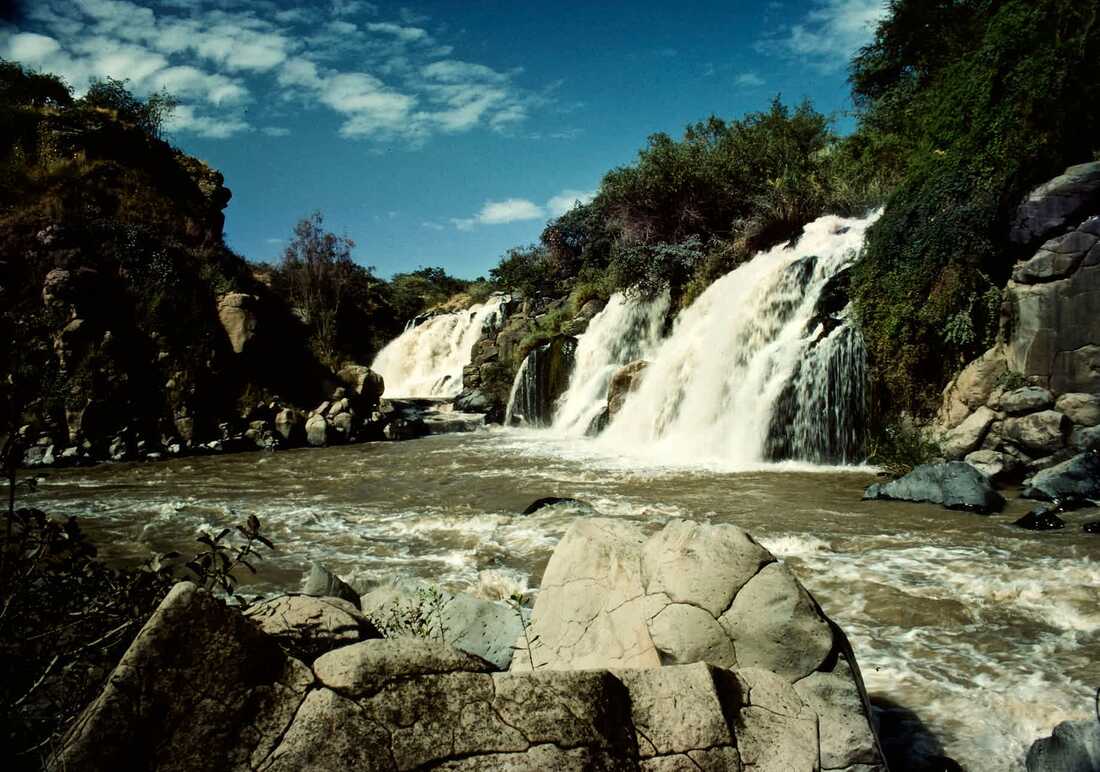
Excerpt from my story, "Land of Troubles," in From The Potato to Star Trek and Beyond September 1976, Heathrow Airport, London: A pair of five fingered spiders skittered lightly up and down my body, quickly probing every crevice, searching for contraband. Briefly, delicately, the fingers traced the outline of the Swiss Army Knife nestled in my pocket. This guy was a pro, quite unlike the clumsy TSA searchers of today. He knew about the knife, but I didn't fit the profile. I passed inspection and proceeded through the boarding gate. I was on my way to Ethiopia and an expedition down the wild and still unexplored Omo River. My friend had warned me. Don't do this. It's far more dangerous than you can possibly imagine. I didn't listen. He was right. The flight from London to Addis Abba was long delayed. At last it was time for my bags to be examined. Every single item was removed, unraveled and looked at closely, then remarkably, precisely repacked. I went through the body inspection and was allowed to board. The passenger cabin of the airliner was near empty on the long flight. All but one of the few passengers were fellow members of our expedition. The outsider proved to be the president of Ethiopian Airlines. During a friendly conversation he mentioned the long delay resulted from a warning — a bomb had been placed aboard. We refueled in Rome and headed out over the Mediterranean. After a long and restless night, dawn found me gazing down at Khartoum spread along the pointed tongue between the merging streams of the Blue and White Nile. We flew on. The next day I opened my journal and began to write. What follows is based on those journal entries. The plane began its sag towards the high plateau of the central Ethiopian massif. It was clear from the outset Addis Ababa was a different city from most I had seen. On flights into many cities around the U.S. and, on this trip, into London and Rome, I had observed each is certainly different in its own way. But they are all variations on a pattern — a western pattern. Addis was a completely unfamiliar world. On the approach to the metropolis, small farms, scattered about the landscape, broke up the countryside into unlikely patches. The farm buildings themselves were small and densely clustered, making compounds which were surprisingly large. Each farm center appeared to be a small village. But these villages were not laid out along streets and blocks. The pattern of the cluster was rectangular but the buildings were irregularly spaced. There was no edge to the city proper. Farms became smaller and closer together as we approached the airport until they fused together. Fields diminished in size, gradually becoming backyards. Occasionally a large structure would appear — almost invariably in these outskirts this would emerge as the gleaming golden dome of a church whose architecture was a legacy from the Age of Justinian. Eventually we were on the final approach to the mile high capital city. And finally, we were down. The long walk across the runway apron from the plane to the small terminal building gave plenty of time to soak in the atmosphere. The air of the high mountain plateau was crisp and a gentle breeze carried aromas of a subtle alien quality. The land was verdant with the growth of the rainy season. The margins of the runway held back charging legions of golden blossomed bushes. I was reminded of California Mustard in the spring. But spring and California were two seasons and half a world away. Here it was Meskel, the holy day of the true cross, in the season of the yellow flowers, and of rain. Things became unpleasant in the terminal. The few of us who were from the plane jammed into a line that had piled up long before. One of my companions for this expedition, Kathy, was plucked from the milling confusion by a matron and hustled into a tiny cubical to be strip searched. She was seething on her return. My problems came later. I collected my baggage from the cart and hauled it over to the custom inspector's table. The official, in a slightly disheveled uniform, poked around in the innards of my pack and suitcase without much enthusiasm. Turning his attention to the tightly sealed carton I had carried from California, he asked me to open it for inspection in fractured English. No way! That box had factory packed tents. Once opened it would be impossible to put everything back together. The inspector got stubborn. I changed my tack. Okay, I would let the inspector open the box, but he was going to have to repack it. I assured him this was going to take several hours. The message got across, and rather glumly the bureaucrat passed me through, box undisturbed. I discovered how narrowly I’d escaped real trouble later. The new "Socialist" government had, a few days before, ordered all the currency of the country be turned in and replaced with a new issue. Of course the new money would be worth less than the old, with higher denominations redeemed at a lower rate of exchange. Soak the rich, as usual. Since the new government had declared it, ex post facto, to be illegal to take money out of the country they were searching travelers for money being smuggled back in. This was the critical day because the deadline for turning in the old currency was on the morrow. No wonder a sealed carton of the right size attracted so much attention. Outside the terminal the straggling survivors of the customs inquisition were gradually collected by a tall, bronzed, boatman type. He introduced himself as John Yost and said he would be one of the guides on the trip. The trip leader, Jim Slade, was on his way from the city and would pick us up in a few minutes. Sure enough, Slade cruised in, driving a battered old car and leading a squadron of colorful taxi cabs. We sorted ourselves out and I found myself seated next to Slade for the drive to the city. We approached Addis Ababa — the Little Flower — along a broad boulevard. Scattered at random along its margins were buildings of an amazing variety of architectural styles. Italian Baroque dominated — the legacy of Italy's long, sometimes unfriendly, association with the country. Otherwise there was no obvious organizing principle. The pavilions were plunked down wherever a patron's fancy chose. Orientations of the various structures were also random. One was as likely to see a back porch as a front door. Many of the structures were large and elegant. Jim said much of the Capital's diplomatic community was housed along this highway. Presently we passed a low cluster of solid but unkempt structures. To one side was a tall flag pole. As we drew abreast a gust of wind ruffled the limp rag at the top and it briefly snapped to attention. Its insignia was a dark gray ball on tattered gray background. The frayed edges of the cloth were like decorative ribbons, signifying ages of dutiful service. It was the embassy of Japan, literally at the end of the world for the poor, devoted folk within. A few miles further and the scattered structures thickened into city. Traffic picked up. It was time for the game. Photo of Awash Falls by Chester L. Richards. Photo and story excerpt copyright @ 2022 Chester L. Richards. Full story, including scene of gun pointed at Chet's belly in From The Potato to Star Trek and Beyond: Memoirs of a Rocket Scientist |
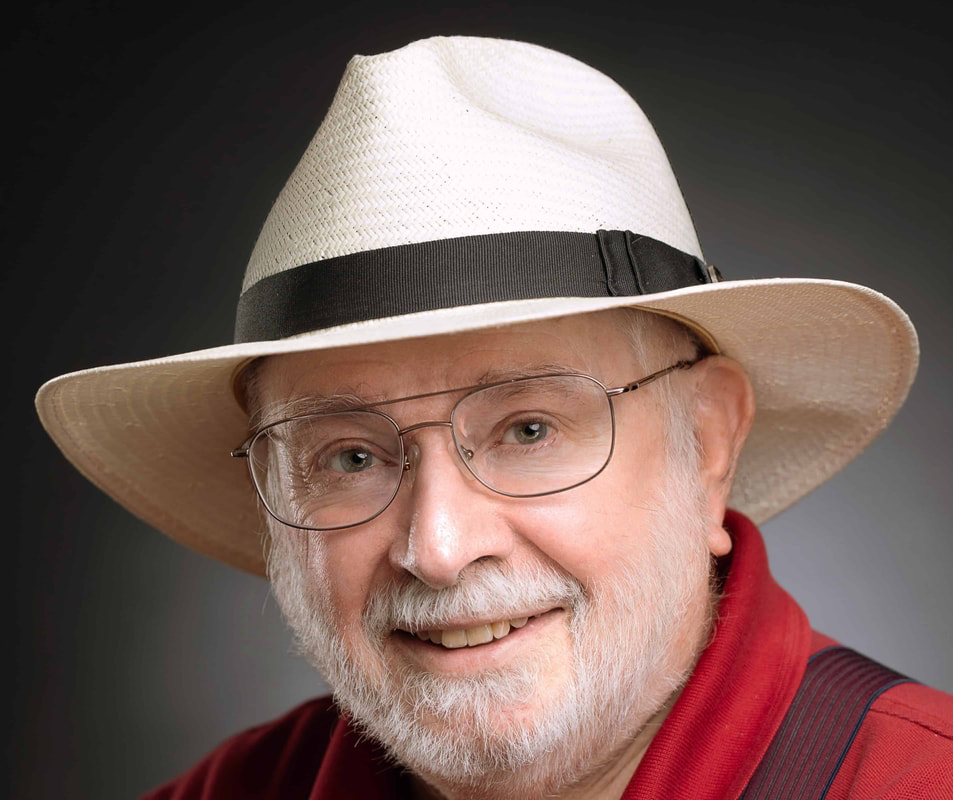
From Chester L. Richards
Hello, and happy to see you here! A little about what's behind these stories: Having retired from the world of aerospace engineering, I now spend time reading, inventing, listening to music, taking photographs and sharing them with friends. And writing stories. Often about people I've met as I've traveled to exotic places, learned about music, surfing, white water rafting, optics, photography. Coming soon are more new stories not in my books. Every story is true. I hope you enjoy them. Archives
September 2026
Categories
All
|
 RSS Feed
Follow Chester For More News

|

|

|

|

|

|

Copyright © 2022 Chester L. Richards. All rights reserved. Updated regularly.
Design by Andesign
Design by Andesign